Capturing Their Story Before Memory Fades
June is Alzheimer's & Brain Awareness Month. New research shows recording a loved one's stories eases grief. Here's how to start, gently and today.
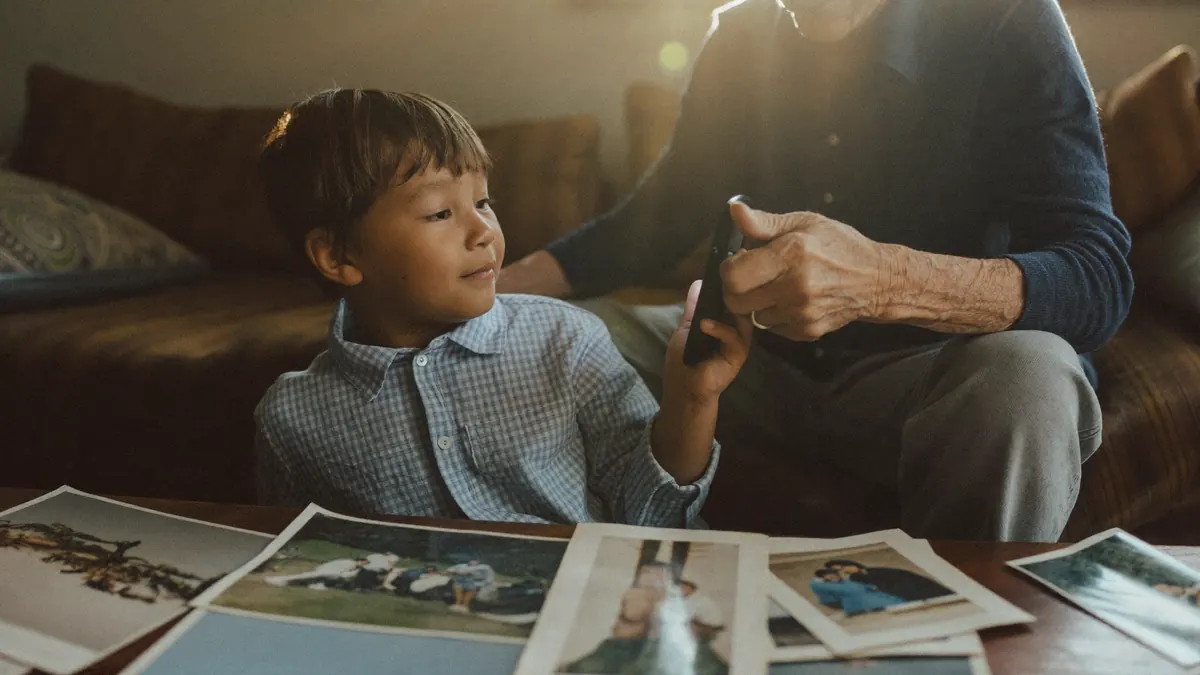
Every June, the Alzheimer's Association marks Brain Awareness Month. It is a season to talk about memory. And it is a gentle nudge to do something many of us put off. Sit down with the people we love and capture their stories while we still can.
If someone in your family lives with dementia, that nudge can feel heavy. You may worry it is too late, or that it will only be sad. Here is what surprised us. New research shows that recalling old memories together can ease grief and bring real comfort, for both of you.
This guide shows you how to start this week. No special skills. No big production. Just a few simple ways to hold onto what matters.
Why This June Is the Right Time to Start
Dementia changes memory over time, but it rarely takes everything at once. Early and middle stages often hold vivid, detailed memories, especially older ones. A song from childhood. The smell of a grandmother's kitchen. The day they met their spouse.
That is the window. It does not stay open forever, and no one can say how long it lasts. So the best time to begin is now, in whatever stage your loved one is in. You are not capturing everything. You are capturing something. And something is a gift.
A Gentle Reminder
You do not need to record a whole life story in one sitting. Five minutes counts. A single answered question counts. Start small and let it grow.
What the Research Actually Found
This is not just a nice idea. In April 2026, researchers at Weill Cornell Medicine and the University of Southern California published a study in JAMA Network Open on a tool that helps families build a shared legacy with a loved one who has dementia.
What did they find? Looking back on cherished memories together helped reduce feelings of loss and resentment. It improved quality of life for the caregiver and the person with dementia alike. The researchers call them a care pair, because the comfort flows both ways.
That matters because caregiving is hard. About 45 million Americans care for an aging or ill family member without pay. Many feel worn down and alone. Reminiscing will not fix everything. But the evidence says it genuinely helps.
Americans caring for a loved one without pay
Cornell and USC study linking reminiscence to less grief
Comfort flows to the caregiver and the person with dementia
Five Gentle Ways to Capture a Story This Week
You already carry the only tool you need. Your phone. Here are five low-pressure ways to begin.
- Record a voice memo. Ask one question and let them talk. Their voice itself becomes a keepsake.
- Use photos as prompts. Old pictures unlock stories that questions alone cannot reach.
- Ask one question a week. Small and steady beats one long interview. It feels like a visit, not a chore.
- Film a short video call. Grandchildren far away can join, and the laughter is real.
- Write down the small things. A favorite saying. A recipe. The way they tell a joke. These fade first, so catch them.
Pick one. Just one. You can always add more later.
Recording Family Stories
A practical guide to capturing oral histories and keeping them safe.
50 Questions to Ask
Thoughtful prompts that open up real, meaningful conversations.
What to Ask When Words Get Harder
As dementia progresses, long stories may give way to short moments. That is okay. The goal shifts from facts to feelings, from the whole story to a warm connection right now.
Lean on the senses. Play a favorite song and watch what it stirs. Cook a familiar dish and ask what it reminds them of. Hold up a photo and simply say, tell me about this. You are not testing their memory. You are spending time with them.
And if they tell the same story twice, let them. To them, it may be the first time. The point was never the transcript. The point is being together.
Meet Them Where They Are
Skip questions that start with do you remember. They can create stress. Try open invitations instead, like tell me about, or what was that like. There are no wrong answers, only shared moments.
Turning Fragments Into Something Lasting
So now you have a few voice memos, some notes, maybe a video or two. What next? You turn the fragments into something the whole family can hold.
That could be a simple photo book with captions in their words. A shared folder of recordings for the grandchildren. Or a printed keepsake that gathers the stories in one place. The form does not matter. What matters is that the memories live somewhere outside your own mind, safe for the people who come after.
A simple way to gather the stories
If turning scattered notes into a finished keepsake feels like a lot, tools like Kindred Tales can help. They send a gentle prompt each week and turn the answers into a beautifully bound book. No tech skills needed.
Learn About Kindred TalesFrequently Asked Questions
How do I record stories from someone with dementia?
Keep it simple and short. Use your phone to record a voice memo while you chat, and let old photos or music spark the conversation. Ask one open question at a time, and follow their lead. Five honest minutes are worth more than a long, tiring interview.
What questions should I ask to preserve family memories?
Start with warm, open prompts like tell me about your first home, or what was your mother like. Avoid quiz-style questions that begin with do you remember, since they can cause stress. Our list of 50 meaningful questions is a good place to begin.
Is it too late to capture memories in late-stage dementia?
No. Even when long stories fade, connection remains. Lean on the senses with familiar songs, foods, and photos. The goal shifts from recording facts to sharing a comforting moment together, which still holds deep value for both of you.
Does recording memories really help with grief?
Research suggests it does. A 2026 study in JAMA Network Open from Cornell and USC found that reminiscing together reduced feelings of loss and improved quality of life for caregivers and people with dementia alike. It is a small act with a real emotional payoff.
Key Takeaways
- June's Brain Awareness Month is a natural time to start capturing stories
- Early and middle stages often hold the most vivid memories, so begin now
- New 2026 research links reminiscing to less grief for the whole care pair
- Use your phone, old photos, and one question at a time to keep it easy
- When words get harder, lean on the senses and focus on connection over facts
Hospice Care Planning Guides
Practical resources to help families navigate hospice care decisions.
Browse all guidesMore on Legacy & Memory
How to Preserve Family Stories: A Simple Legacy Guide
Learn how to preserve family stories and capture life stories effectively. Our guide helps you document your loved one's history with ease and meaningful care.
Life Story Hospice Projects: Finding Meaning and Peace
Explore how life story hospice projects like dignity therapy help patients find peace. Discover how to preserve a loved one’s legacy during their final journey.
50 Meaningful Questions to Ask Your Parents About Life
Discover 50 essential questions to ask your parents to preserve their life story. Build a lasting legacy and honor their journey with these interview tips.
Their stories deserve to be remembered
Kindred Tales helps families capture life stories through guided weekly prompts — turning memories into a beautiful, professionally bound keepsake book. Many hospice families tell us they wish they had started sooner.
Recommended by the Hospice Scout team